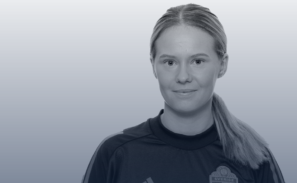






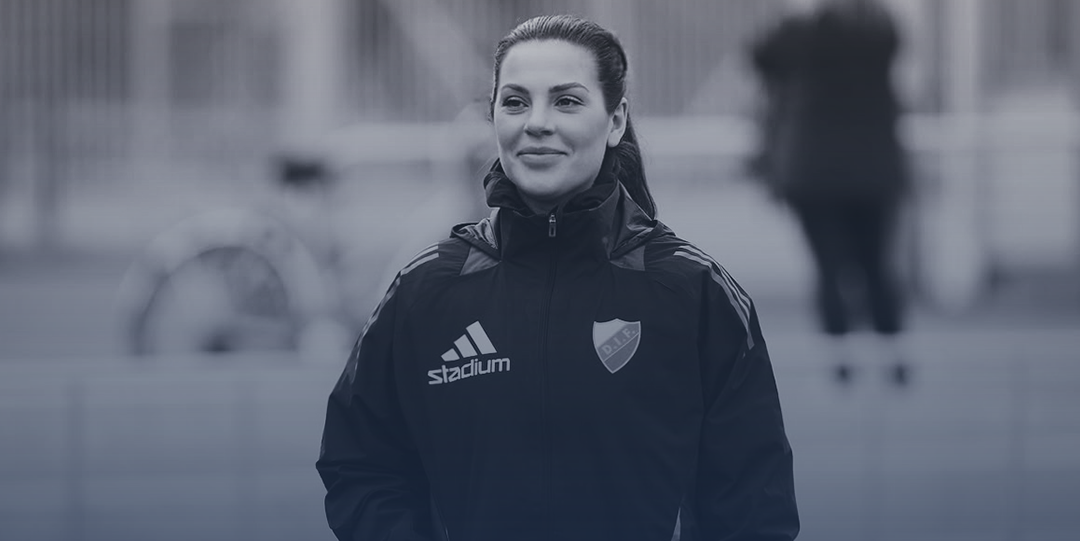
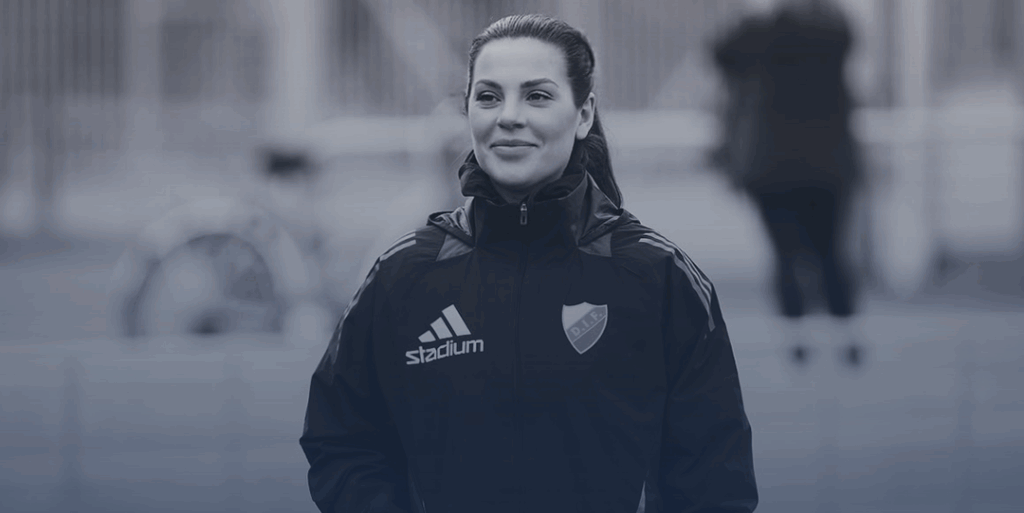
Lisa Hellenberg grew up in Västerås, where she still lives today with her two young sons. She played football from an early age and spent her final season at Eskilstuna United before stepping away from the sport at 19. After years of studying, starting a family and running her own business, she eventually found herself wanting to return to the game—but this time as a coach.
– I realized I wanted to be more involved in football than just being a spectator. I asked VSK if I could help out with extra training while taking my UEFA C course, and that’s where it all started, says Lisa Hellenberg.
She went on to coach VSK’s women’s team for three years and also launched a regional development project called Fick+ for girls aged 11–14 from all over Västmanland. After the 2023 season, she earned her UEFA B license and began exploring new opportunities. With a strong interest in education and youth development, she focused on academy coaching—and landed in Djurgårdens IF’s girls’ academy, where she now works full-time.
What inspired you to become a coach?
– My mom. She’s been a football coach for as long as I can remember. I’ve seen both the hard parts of the job and the incredible rewards. I also think I inspired myself in a way—I wanted to be the coach I would’ve needed when I was younger, dreaming of becoming a pro. A lot of how I coach today is shaped by how I felt back then, both on and off the pitch.
What qualities do you consider most crucial to being a successful coach?
– Leadership. Without a doubt. You can know every tactical detail in the book, but if you can’t create a safe, fun, and developmental environment, it won’t matter. Your knowledge won’t make an impact if you don’t have the leadership to carry it through.
What challenges do you usually face in your work as a coach, and how do you deal with them?
– In the beginning, I really felt I had to prove myself. I often met skeptical men—at coaching courses and in everyday situations. Being a woman in football means you learn from a young age that you have to fight to be seen and heard, that nothing comes for free. You always have to perform.
– I don’t feel like that anymore. Today, my biggest challenge is finding balance and feeling like I’m enough—in both my roles as a coach and as a mother.
What is your goal as a coach?
– I find it hard to pinpoint a specific goal. For me, the journey itself is the most exciting part. I want to work in environments where I grow and feel good. Right now, I’m in a place where I get to develop the areas of my coaching that are really important to me—and that’s exactly what I need.
– I dream about championships, finals, big arenas and all of that. But when, where and how it happens… that remains to be seen.
What is your vision for yourself and for women’s football in general?
– I want women’s football to continue growing, but to build its own community—not just copy the men’s game. I hope to see more investment in women’s football, more resources, better pay, and more equality within dual-gender clubs.
What needs to be done to bring out more female elite coaches?
– We need to give female coaches space on all kinds of football platforms. Visibility and representation are so important. It’s not just about talking about the challenges—we need to highlight the positives of the job, too. That matters.
The interview was created through the project Elite Coaching Pathway in collaboration with EPOS, Sundström Safety and Akea.